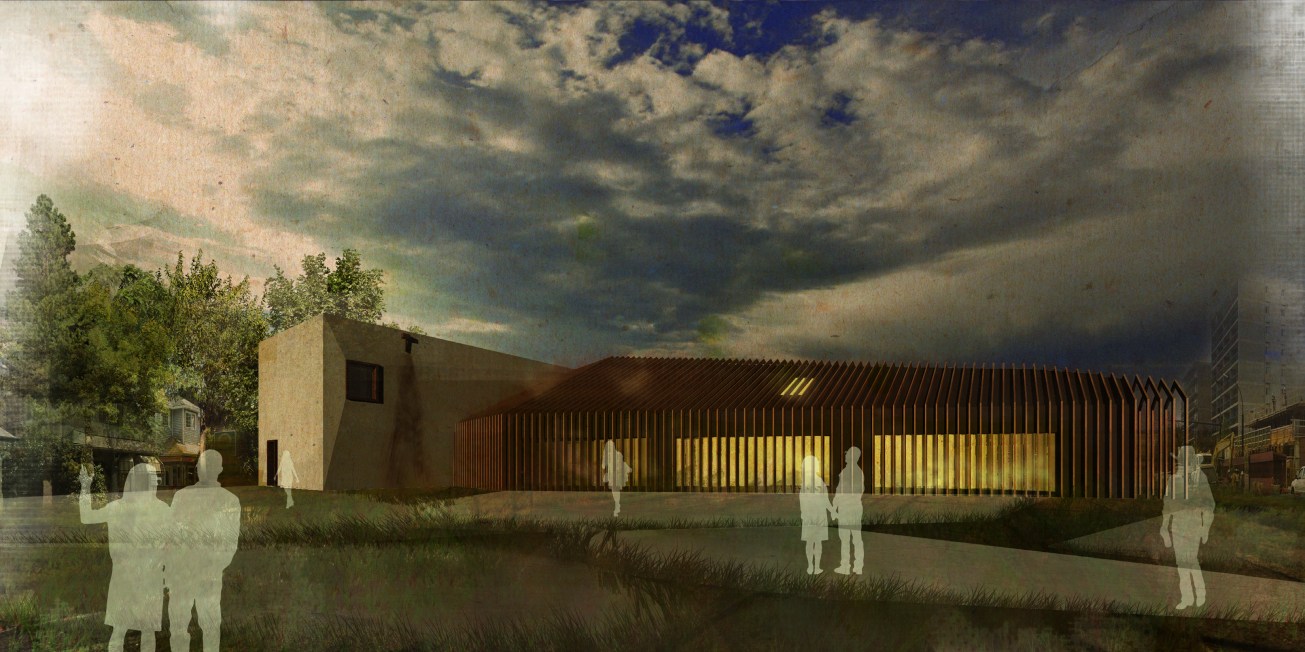
a locavore restaurant, brewery, and cooking school
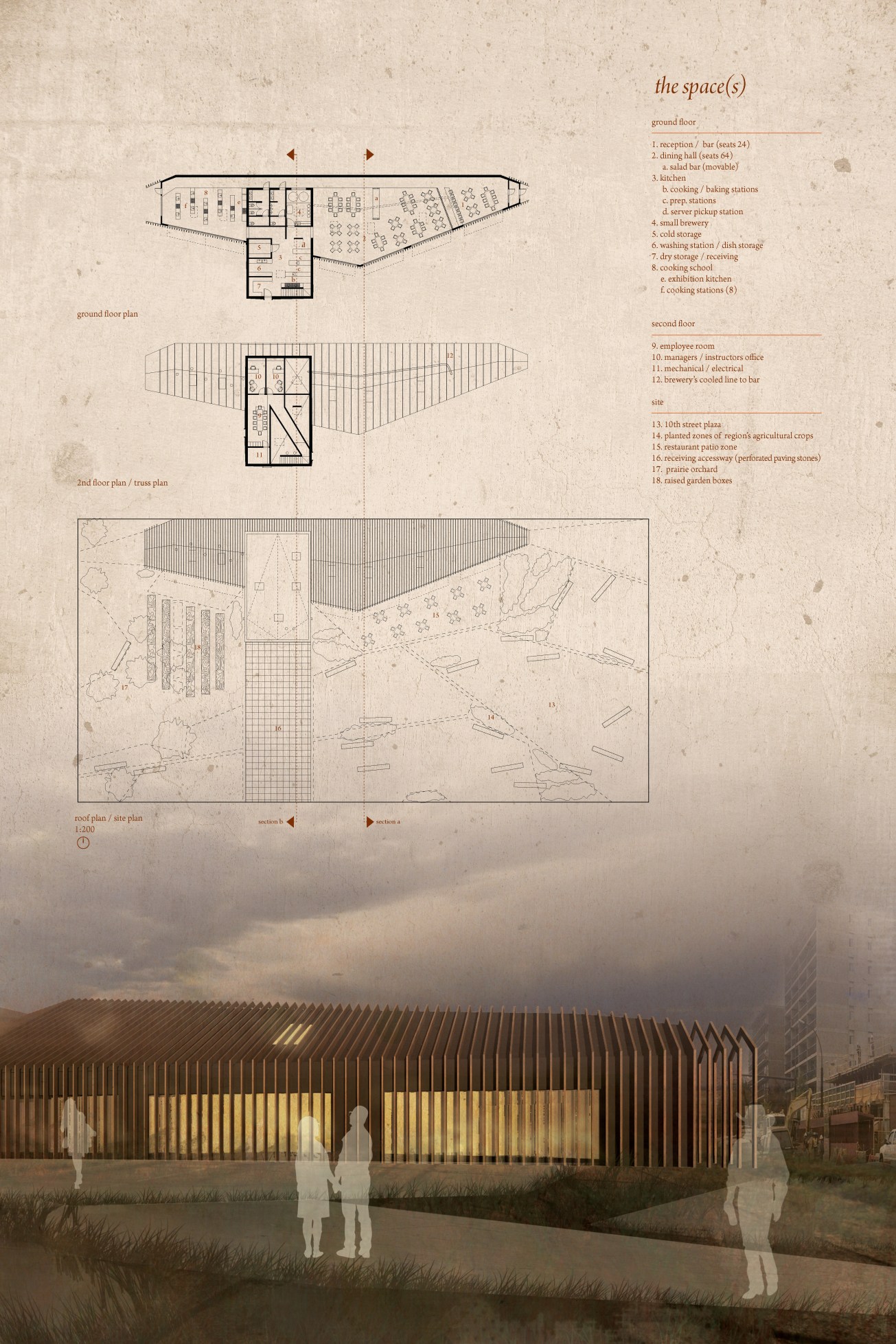
Field is a restaurant, brewery, and cooking school that focuses on creating a dining experience (meals, drinks, and the knowledge behind them), that is rooted in a regional and immediate place and time. Here, local is not a pasted on gimmick, but is the essence of the program and the architecture. This essence in manifest in a number of ways. A small garden, located in the plaza adjacent to the cooking school allows for the cultivation of numerous legumes, small fruits and herbs. The cooking school spaces allow for the canning processes, and other preserving methods to be taught and carried out socially. Additionally, locally produced meats, grains, and other products can be delivered through the kitchen’s receiving door, via the receiving accessway. Here, the vehicles of the producers are showcased in the centre of the plaza, revealing to all those passing by, not only where the products derive, but also the breadth of regional products available. This clarity of origin is something the economic processes of food production unfortunately abstract from the consumer. Architecturally, the space intends to create a thoroughly interior experience, much like being in the loft of a barn, where the spaces created by the exposed materiality of the structure, an the interactions of the objects and actors within it, are not distracted by the busyness of the city outside, but are engaged in the action/interaction of dining, or preparing food or beverage, with others. That said, large horizontally folding doors, integrated into the wood facade, do open the dining hall and cooking schools areas to the plaza, and to the southern sun.
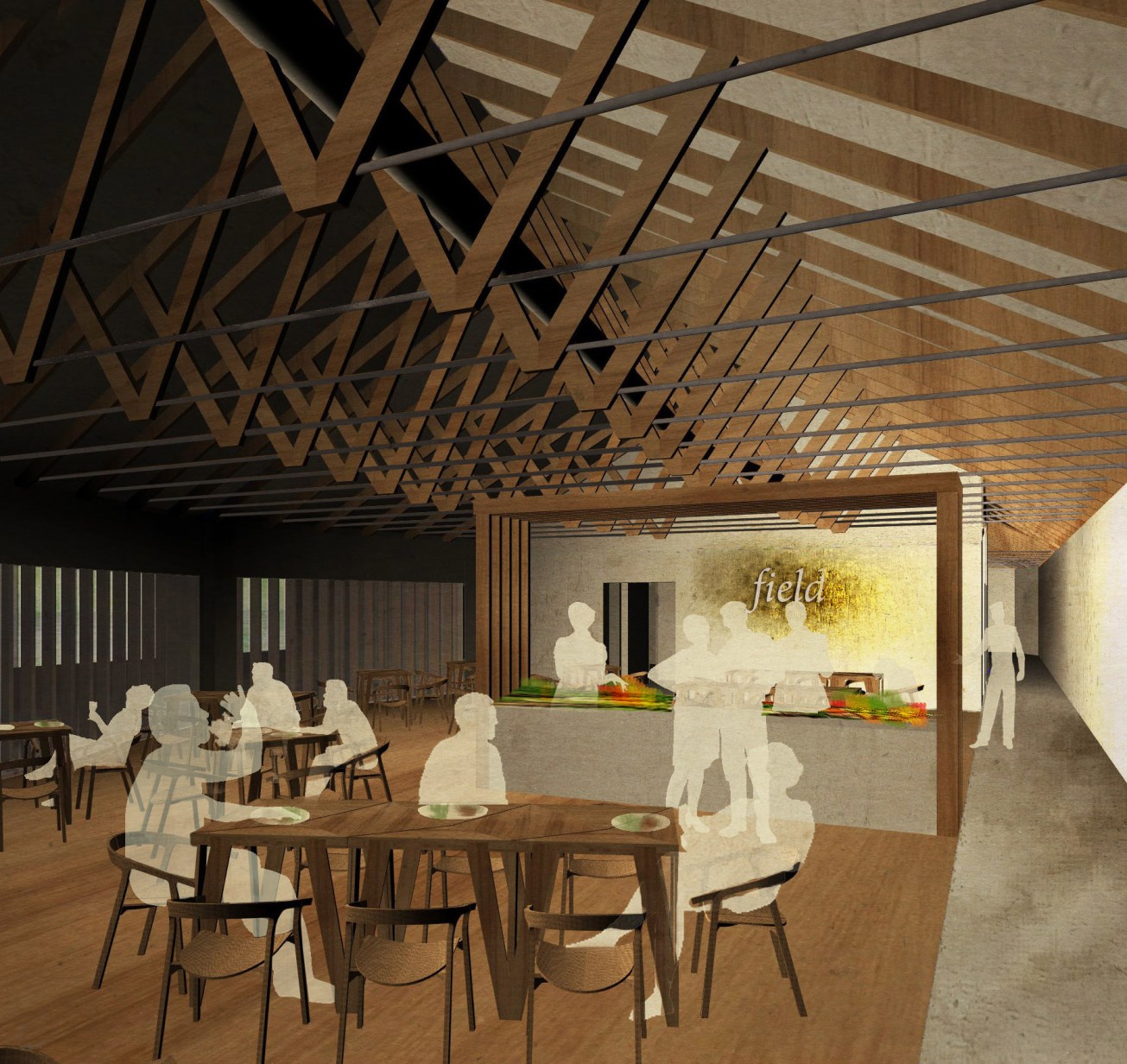
The kitchen is purposefully distanced from the school and dining hall, again to not distract the actions/interactions of dining and preparing with spectacle, but also to create a curiosity between the prepared meal, its ingredients, and the knowledge and techniques behind its preparation. The goal of the space, in essence, is to allow for the social action of dining and preparing food and drink to be fully realized by the engaged participants.


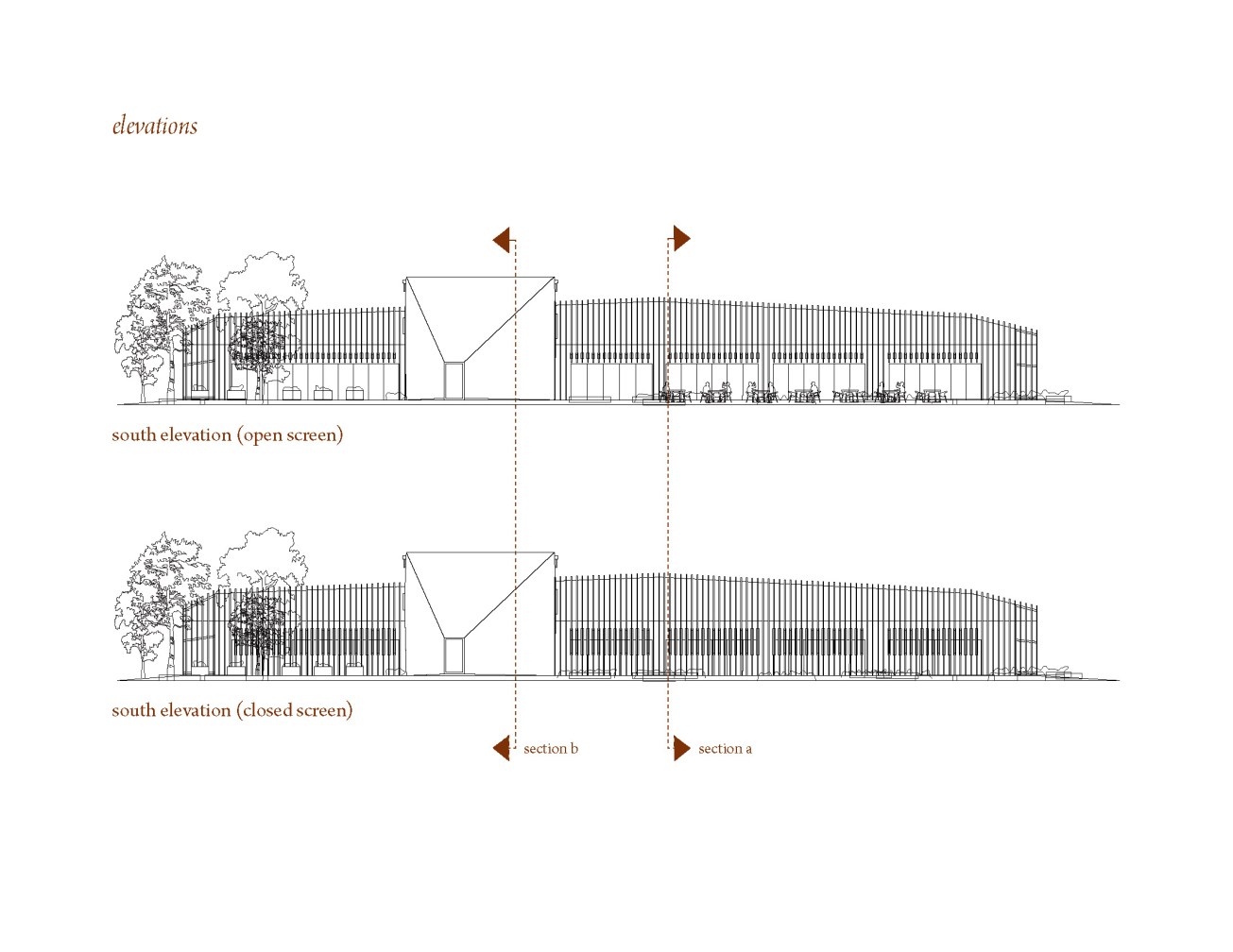
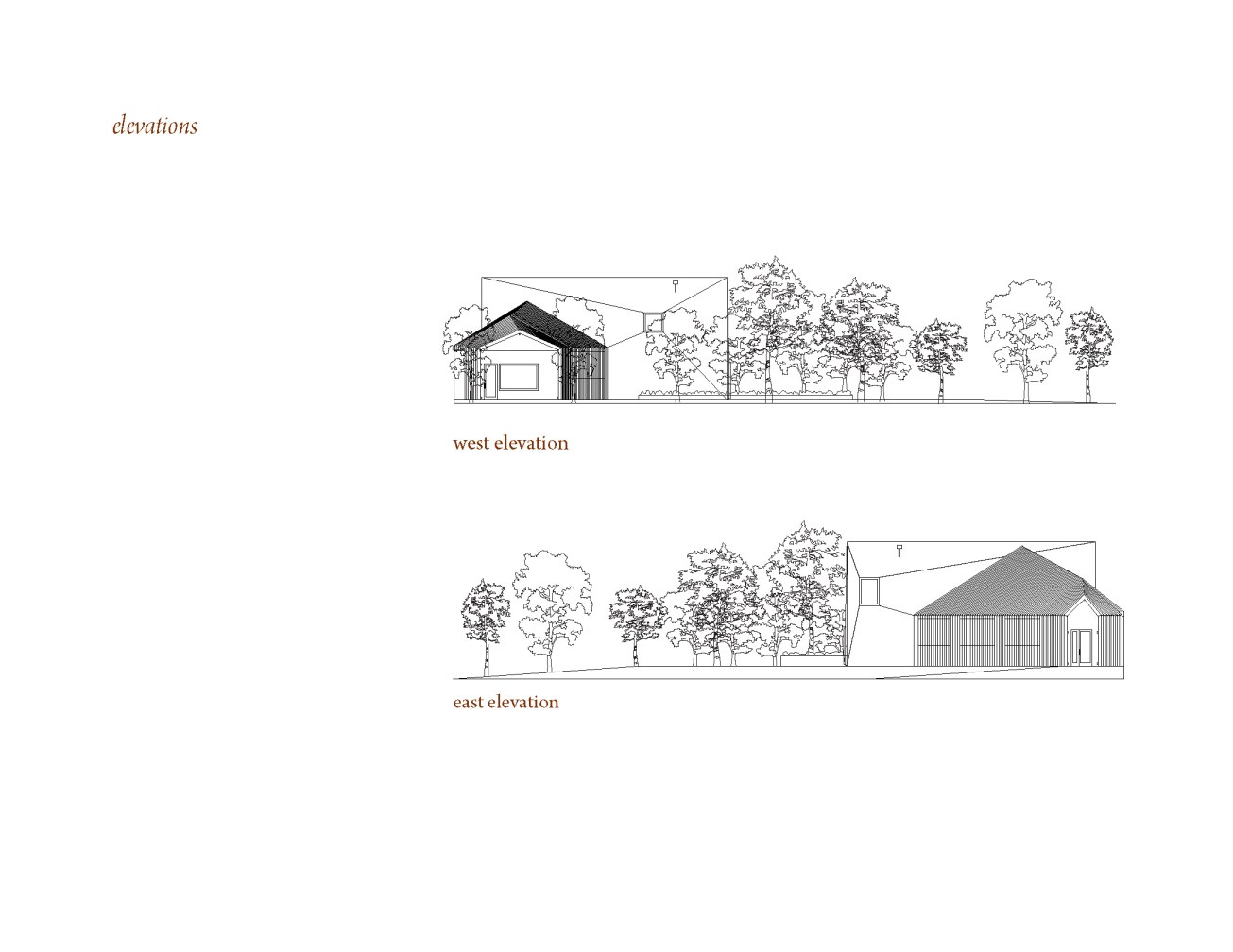
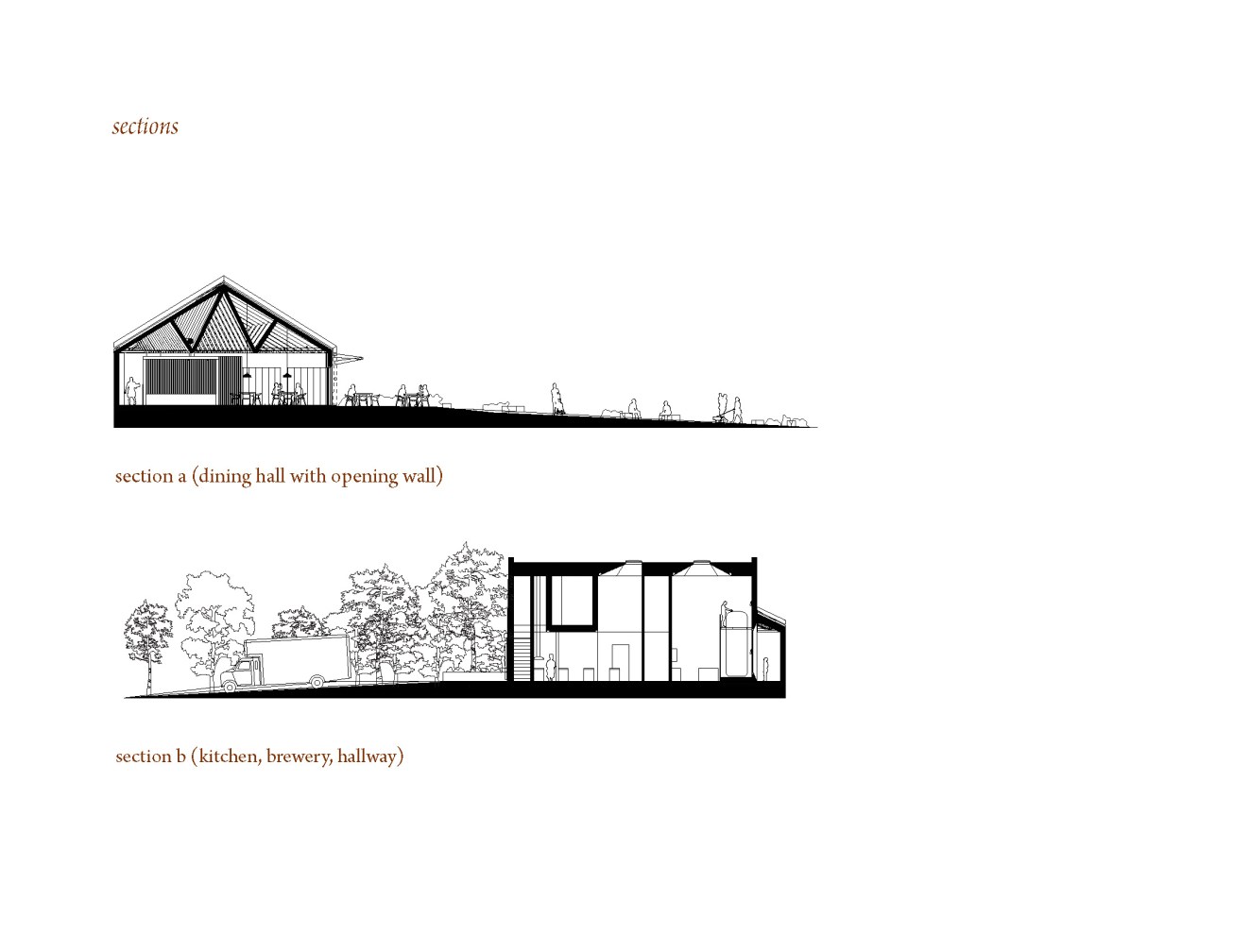
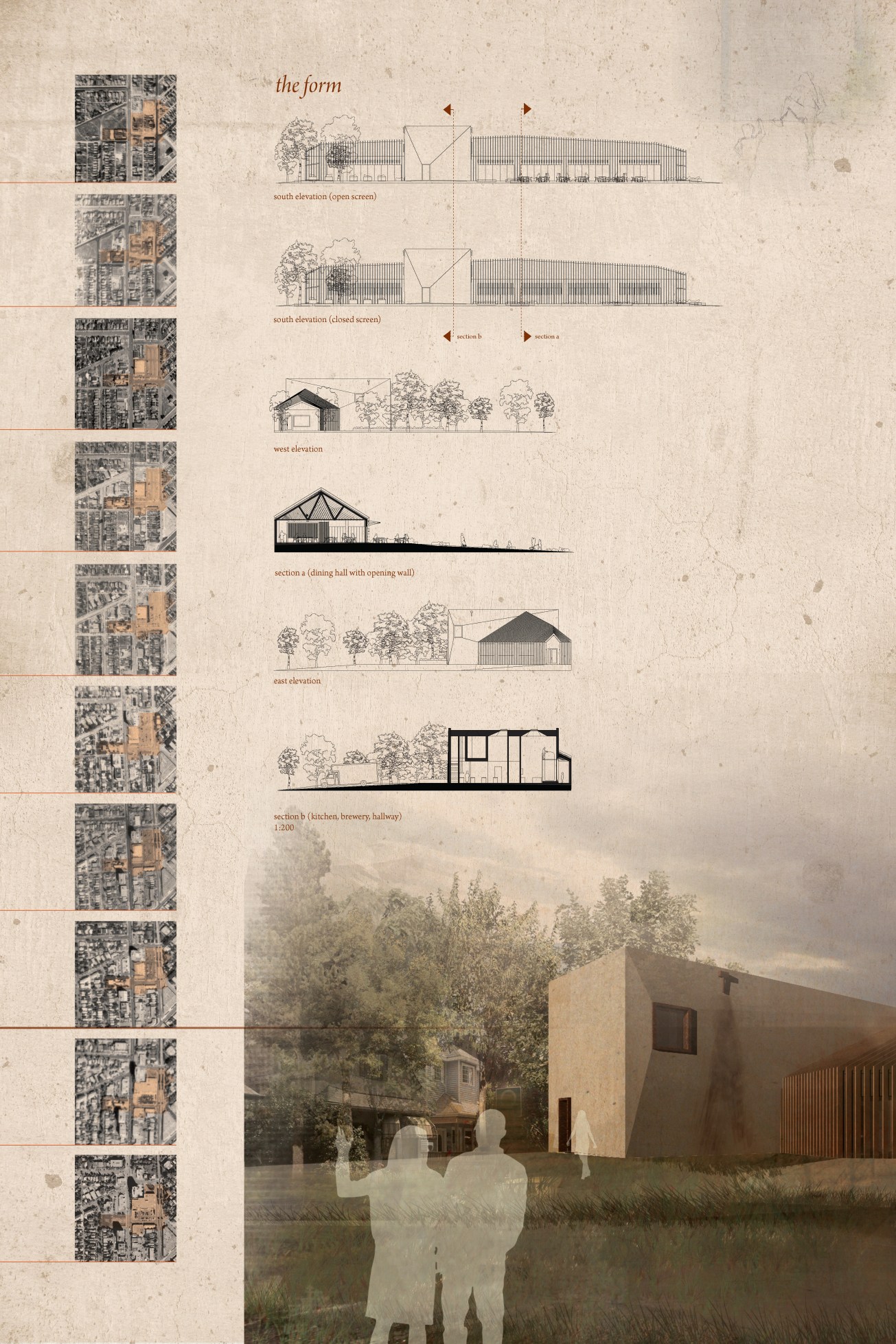
Formally, the architecture is a long and narrow wooden shed with a stone cubic body interrupting it in an off-centre position. These two forms drive in the programmatic distribution: the longest section of the shed houses the lounge and dining room; the cubic body houses the utilitarian spaces (kitchen, brewery, cold and dry storage, ablutions, offices, etc); and, the shorter section of the shed houses the cooking school. All spaces are connected by a long hallway located along the north edge of the shed. This hallway, is demarcated by its concrete flooring. It is only open connection between the dining, ablutions, and cooking school.
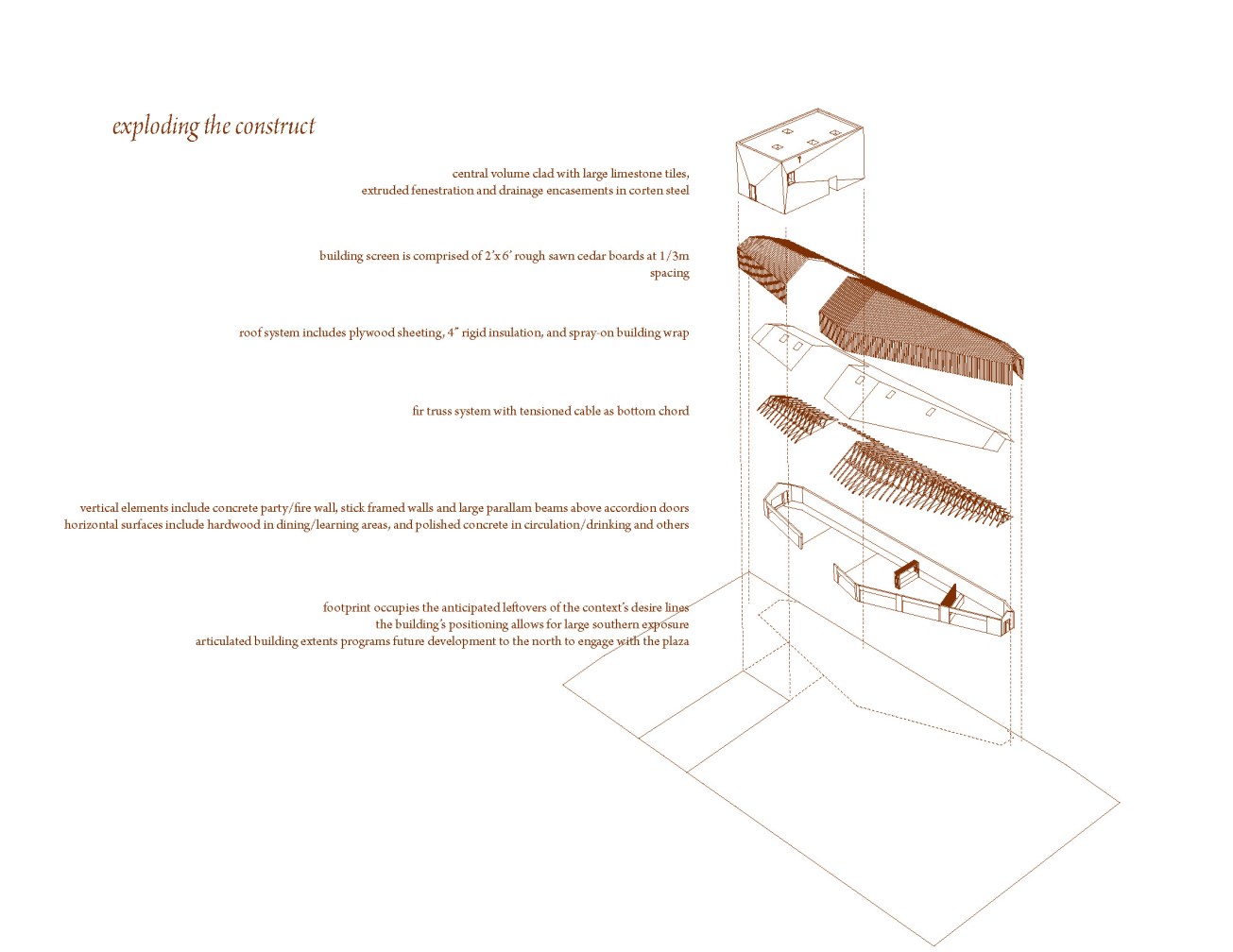
Whereas the cubic body’s interior materiality is rather standard: light reflective and durable surfaces, its exterior skin—even within the shed—is a pale matte orange-gray local limestone. The shed is comprised of brown ash floors below, exposed fir wooden trusses above, and a concrete fire-wall to the North. The South wall, which is almost entirely glazed with accordion doors, allows daylighting to penetrate; however, the cedar fins on the exterior horizontally folding doors detract all but the noon hour sun. Skylights throughout the form operate in the same manner.
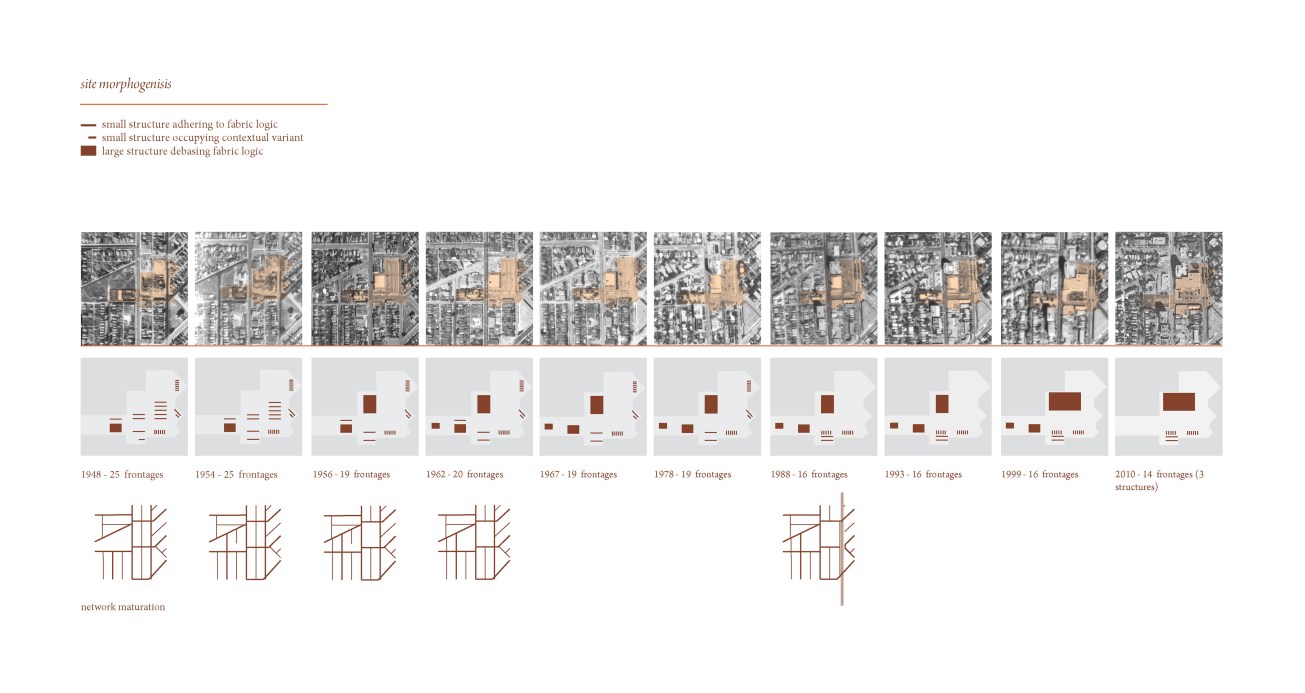
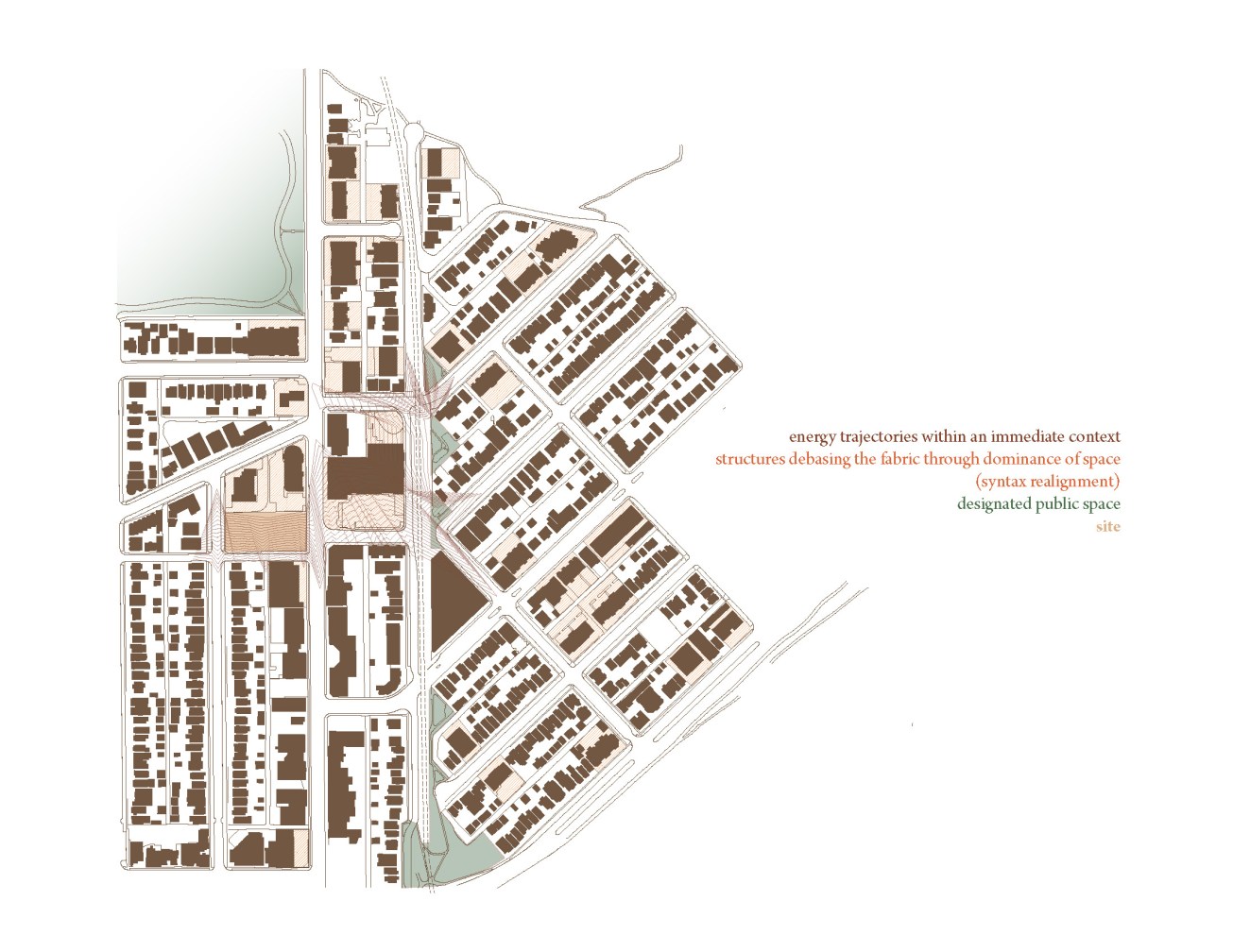
Site Analysis Images
Presentation Boards


 nicholas dykstra