project complete with Caitlyn Browning and Lauren Dynes (sketch by Lauren Dynes)
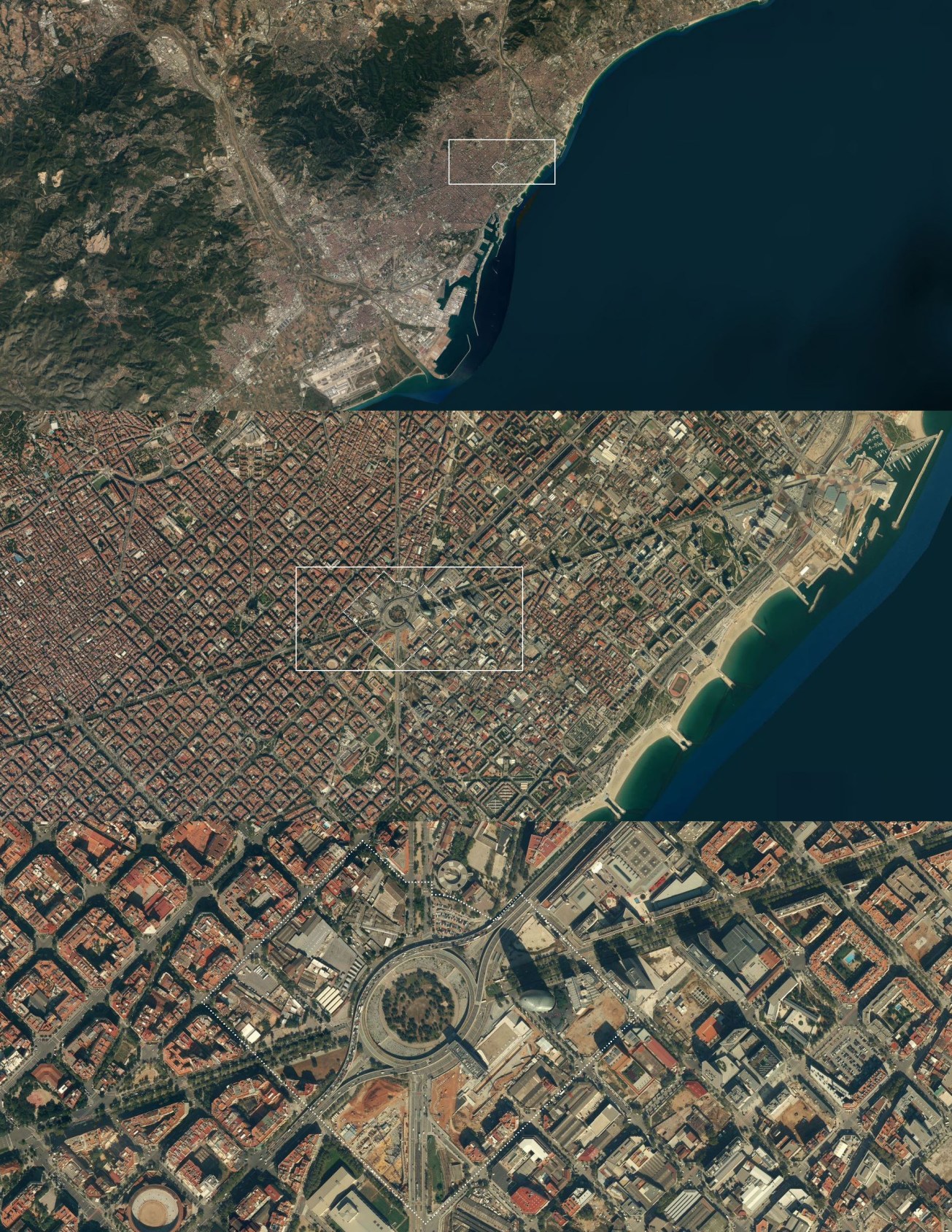
This master plan seeks to provide a careful and nuanced reaction to existing conditions and opportunities with the hopes of creating an unfolding meaning in place rooted in the multiple histories of site. The location centres on an urban void mostly occupied by a complex of multi-layered urban infrastructures. The site currently operates as a interior periphery in the City of Barcelona largely due to its overriding incoherence and historical ambiguities. The plan proposed here, suggests a design methodology that seeks to find elegance and efficacy in austerity. This is believed to be achievable through the tools of the surveyor and archivist. Together, the surveying and archiving of the site’s current and past conditions can give rise to a future that is rooted in site, is functional to needs as they unfold, and is realizable with limited means.
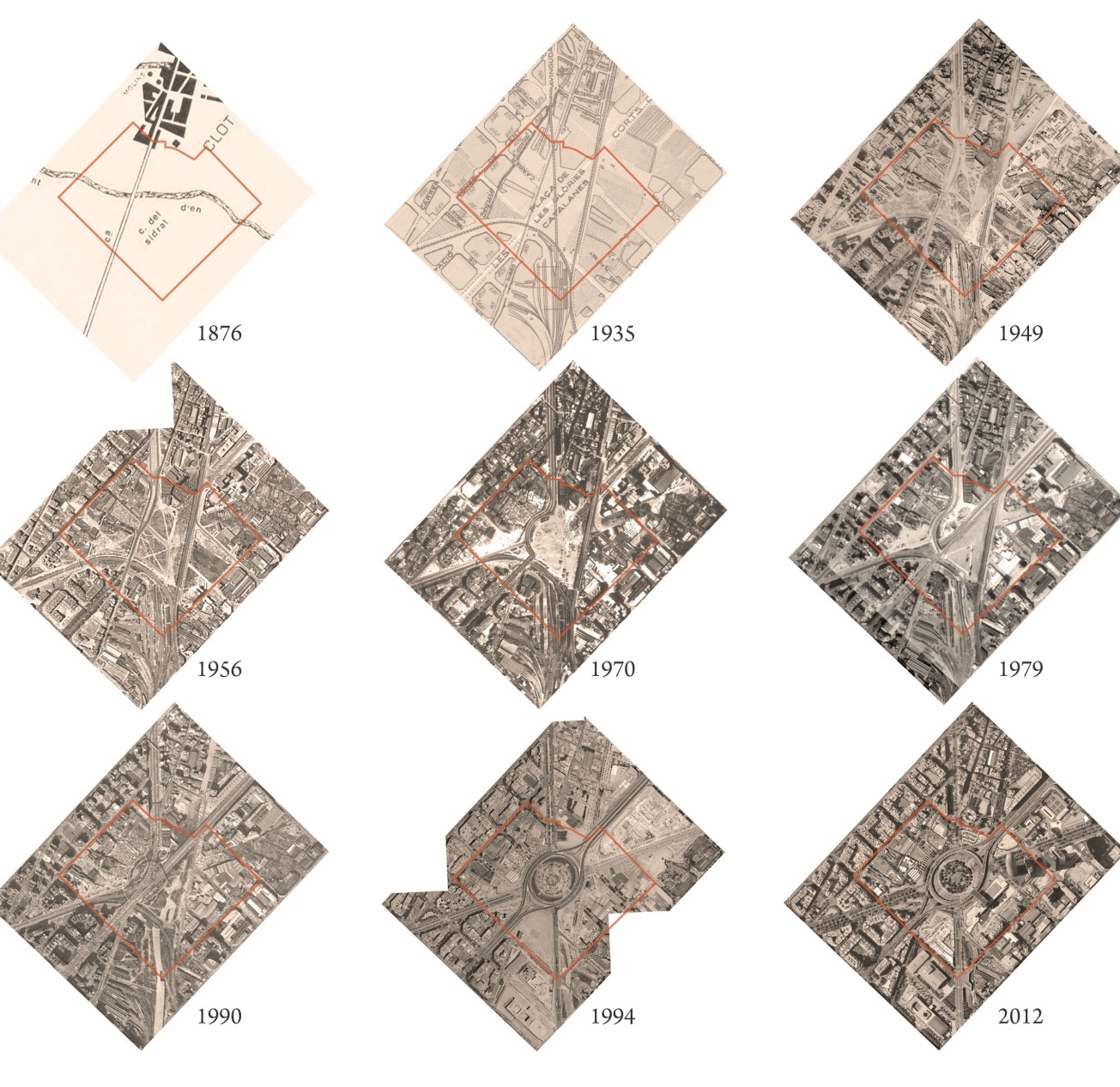
There are 2 scales, the periphery, which operates as a more typical redevelopment master plan, and a core, with its large and layered multi-modal infrastructure landscape, which is centred on providing newfound coherence to the intricate co-presence of flows on the site. For the core, the carving out of the surface is the primary formal technique used. By doing this, the existing layers of flows are revealed, and pathways connecting them are created.
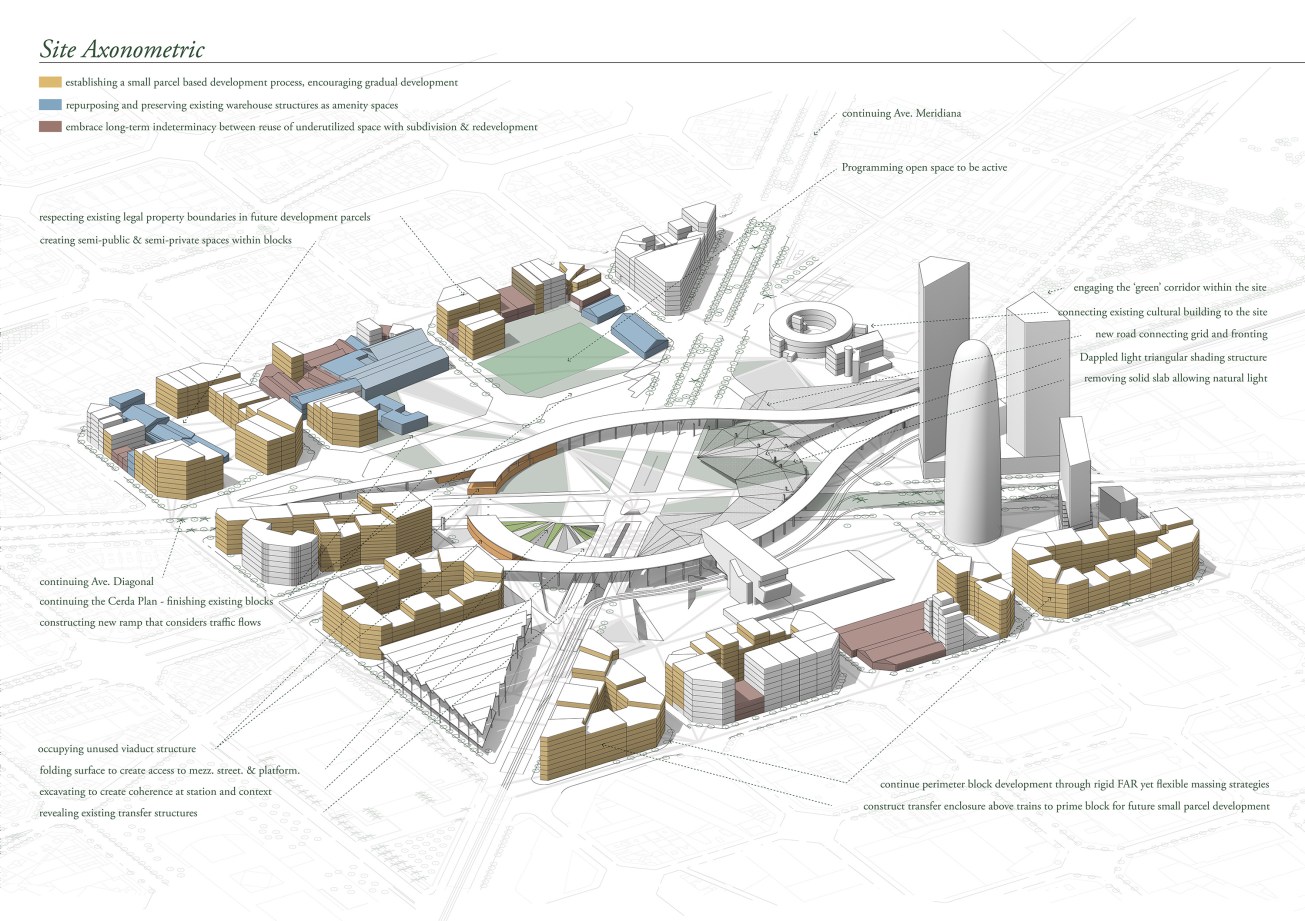
Perhaps the most important flow, not in scale, but in experience, is the ‘greenway’, which connects the City’s proposed linear park through the site. This flow is important because it is currently the least coherent. By adding a large undulating screen structure, which attaches itself to existing structural and functional conditions, at all sectional levels, the path becomes a focal element in relation to all other flows, and achieves its rightful position in the overall hierarchy of flows.

The periphery’s master plan outlines an approach, centred on surveying and archiving the existing, and a program distribution based on the needs of the area, at any given time. Here, there are a multitude of different projects to be completed separately, each capable of operating within the market’s, or state’s, uncertain demands and capacities, thereby growing at its own pace. Additionally, the plan’s careful attention to the site’s morphological integrity, results in the limited need for cadestral realignment, meaning property lines will not need to be redrawn, allowing developments to be built in a piecemeal fashion, with minimal impact to the present daily experiences of the area’s current residents.
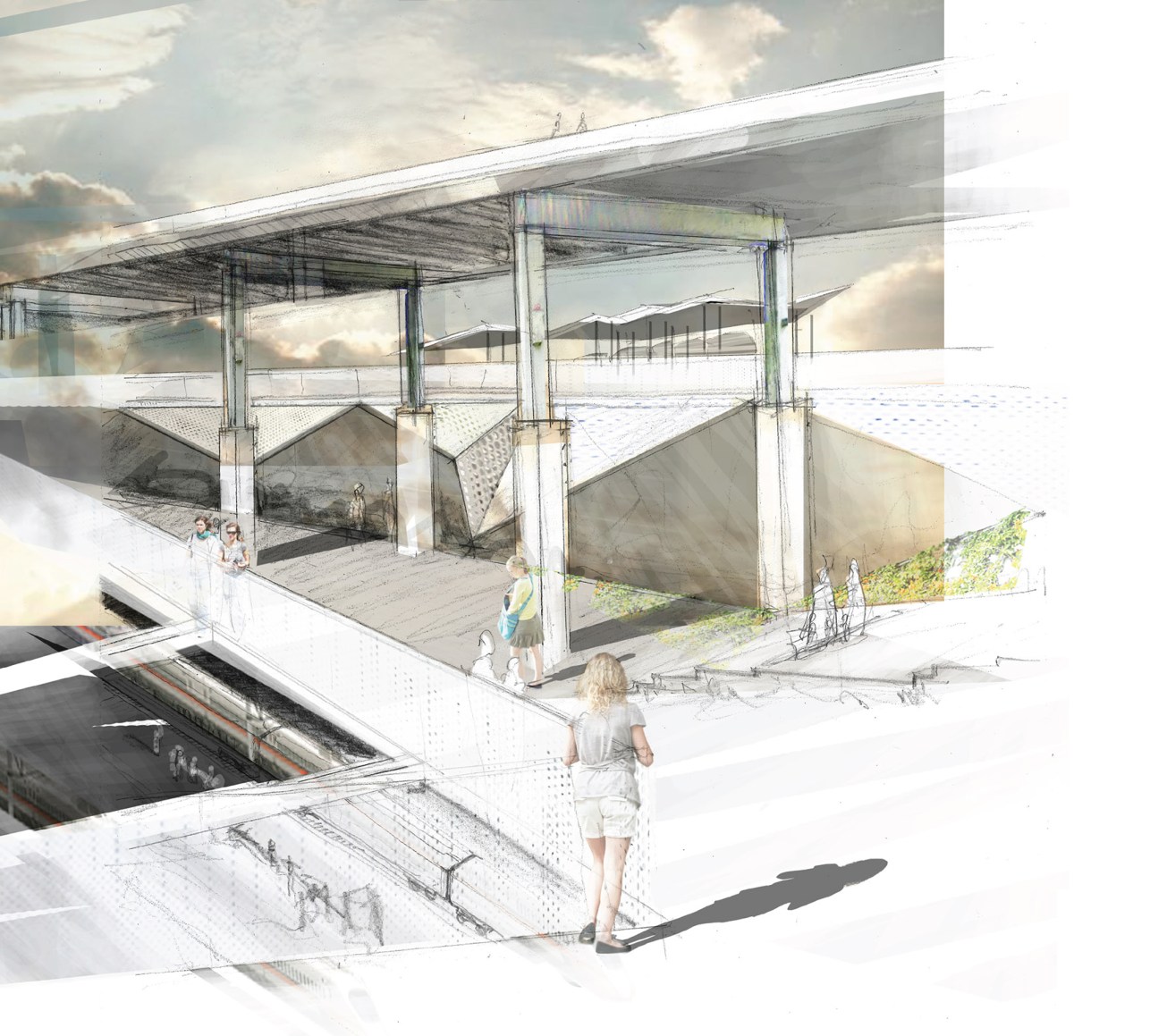
Overall, the belief that underpins this master plan is that Barcelona should grow to inhabit its existing infrastructural and industrial remnants, even if dramatic re-purposing is required. It is a loss to a society’s collective cultural memory if significant types of urbanism are simply erased. Instead, this proposal calls for the area’s remnants of obsolete urbanisms to become foundational elements for the future, structuring new ways of living within the skeletons of the past.
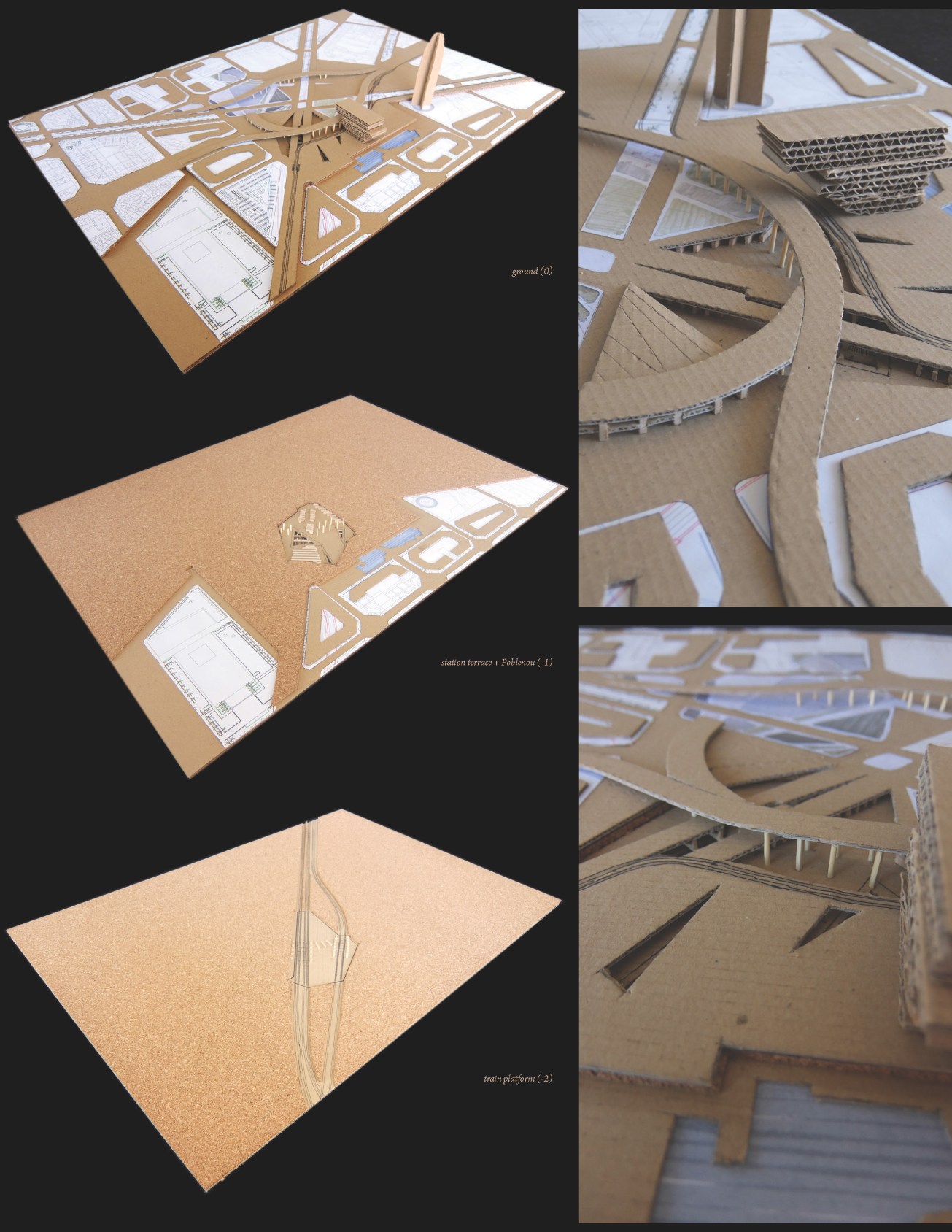
process and concept background
the viaduct
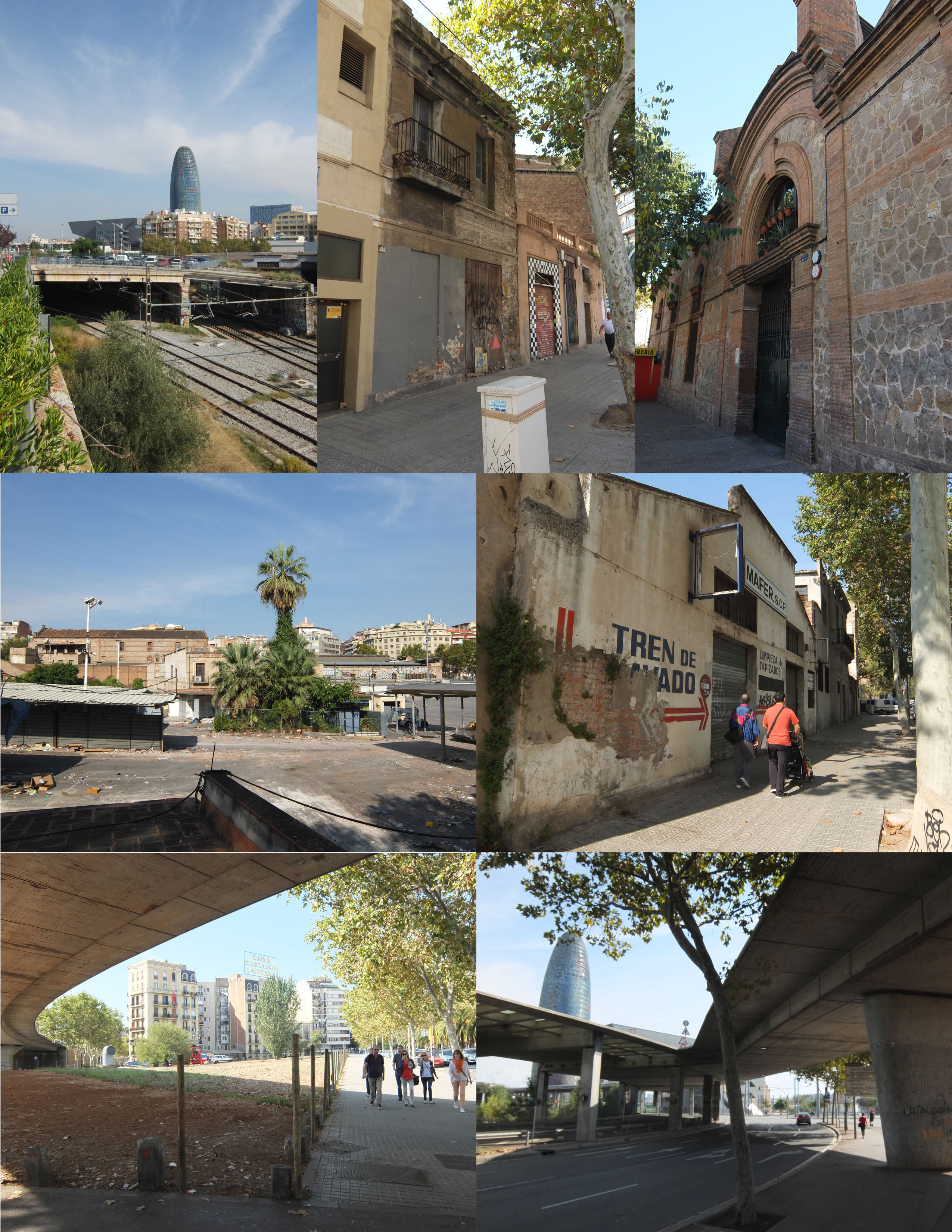
It was decided, early on, to keep the viaduct operating as a traffic viaduct (though in a limited capacity), in order to not have to needlessly redesign an equally massive and costly piece of road infrastructure when the present infrastructure was still functioning. This meant that, while the ground plane was relatively free, rising above it would entail exposure to the viaduct’s noxious externalities. Subsequently, a low, even subterranean, approach seemed best suited for the site’s program. It was hoped, that the project could be designed in a manner that deals with precision and respect for the given, as well as a caution not only to the complexities of the given, but also to the ease of utopic speculations. Immediately after beginning to investigate the subterranean, it became evident that history, throughout the site, whether obsolete or still functioning, has been buried, leaving an artificial mound on the surface.
(Note: If, or when, in the future, vehicular loads on the viaduct are not longer needed, architectural interventions of a more vertical nature would be applied, creating another sectional component to the site, and adding more use and users to the area. In this sense, the frame of the heart of the project, the viaduct, is left as an open-ended land bank, or scaffold, waiting to be appropriated by yet to be determined typologies).
flora drainage and underground (archaeology)
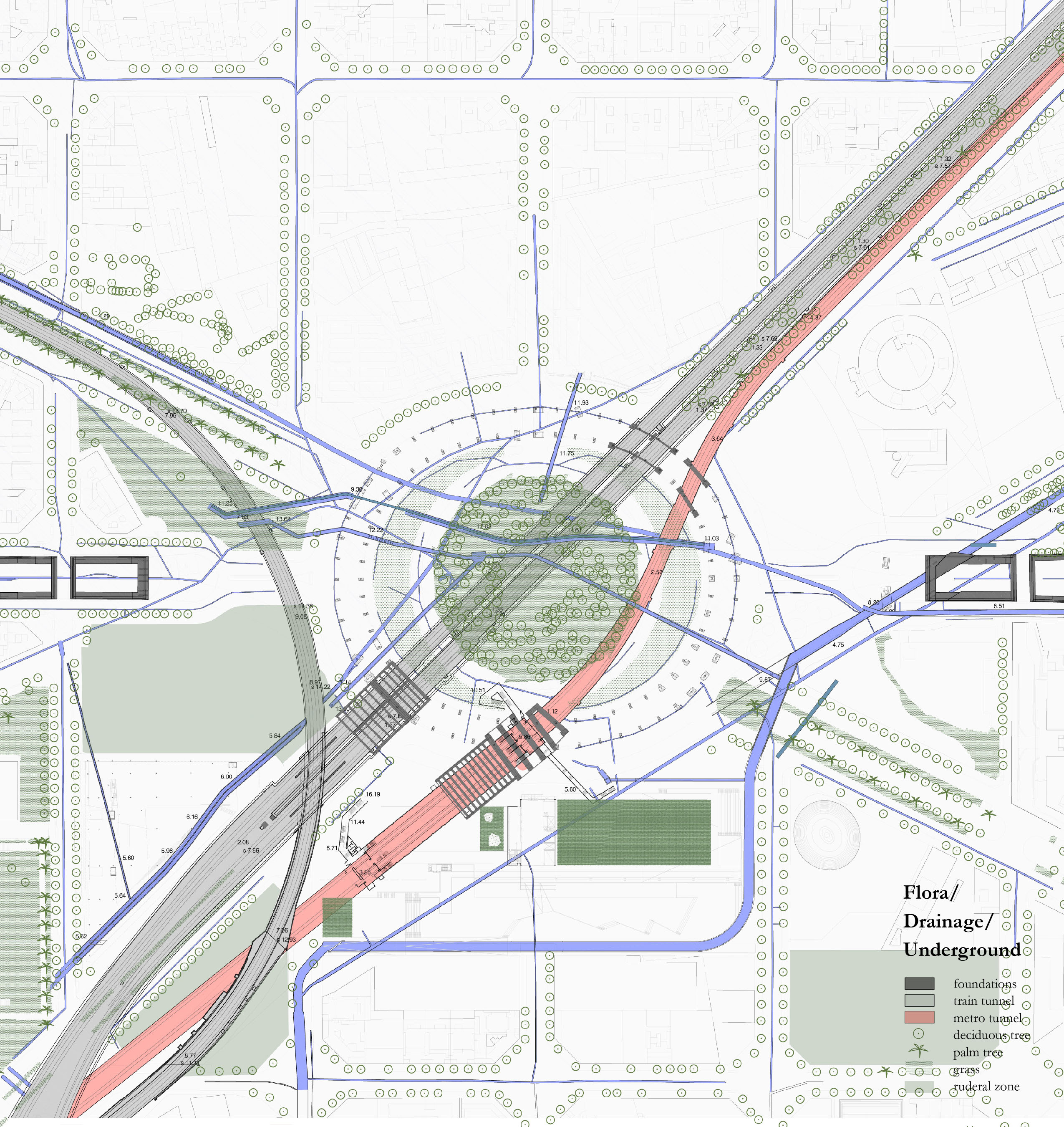
In conjunction with the subterranean, the flora of the site, from the roots the canopy tops tops, became a valuable subject of investigation.This tied together planting, drainage and the archaeologies of the past and present. Together, these three elements span the site’s sectional complexities, from the lowest infrastructural tunnel foundation to the highest London Plane treetop, in a manner that celebrates these palimpests’ complex, yet utterly simple, nature: water flows down, flora requires water, and underground archaeologies negotiate and create both historical and the present relationships and unseen structures of interdependence.
scales
The two scales (the periphery’s redevelopment scale, and the centre’s transportation scale) ofthe project were purposefully kept more or less discrete, which allowed for the avoidance of an introverted and overly monumental design from emerging. The two scales effectively scaled down the intensity of the centre: while the inner-scale operates on a metropolitan level, the periphery operates at the local. By using the given context’s values, the edge of the project is blurred into many smaller projects, local amenities are spread and are kept from being overly tied to a monumental design strategy, something we strongly wanted to avoid. ‘Escola de les Petites Glòries’, is an example of this down-scaling, where the central technique is applied at a local level, to one specific block, allowing a rooted transformation to be achieved.
a vanishing vernacular

The site’s warehouses are an incredibly rich resource of potential. Upon investigation, we began to realize their tectonic and material richness. Even though they are examples of a utilitarian vernacular, their architectural richness is noteworthy on many levels. Exploiting this richness in strategic reuse instances seemed like a obvious technique in grounding the project in its site, and assuring that a degree of authenticity is achieved. It is believed that the material and tectonic qualities of the present conditions, are the seeds for discovering elegant departure points for new series urban hybrid public amenities.
Subsequently, each building was investigated for its condition, potential, and typological richness. It became clear that the area is witnessing the rapid disappearance of its industrial warehouses, even though these spaces currently offer the richest diversities of potential for reuse. Additionally, these spaces are some of the few remaining evidences of pre-Cerda development in the area.
surveying the best of recent Catalan design
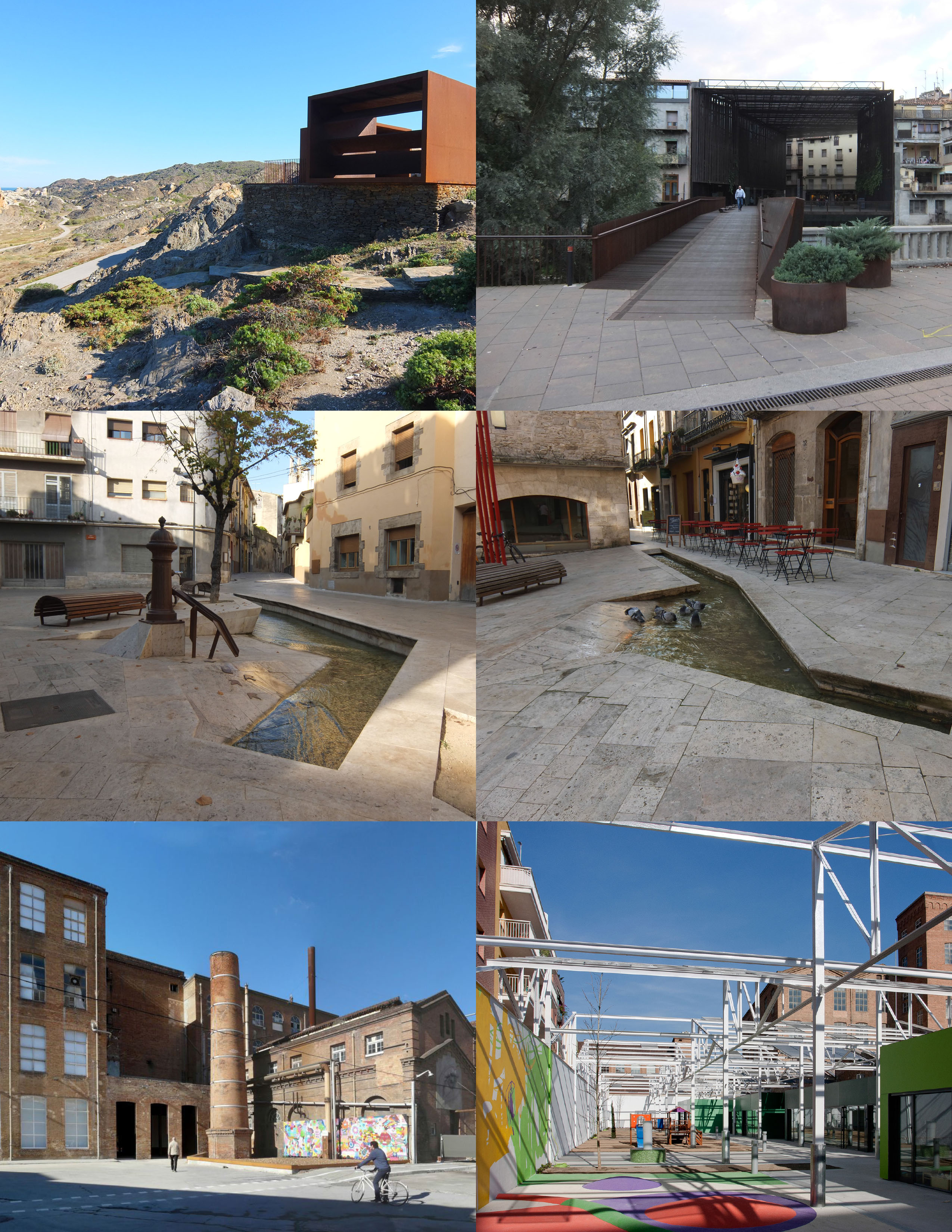
Several recent projects were visited throughout Catalunya. Specifics inspiration was found in the Tudela-Culip Restoration Project, by EMF, Ripoll’s new Public Space Teatro La Lira by RCR, the Public Spaces in Banyoles by Mias Arquitectes, Fabra i Coats by Manuel Ruisánchez arquitecto & Francesc Bacardit architects, and the Nursery Filadora by BCNP Arquitectes. Each project utilized a unique tool set for unearthing or revealing its site’s potential by engaging the found archives. Unlike the heavy handed approaches common in other master planned areas in Barcelona, we believe that our site can be regenerated slowly, with a more careful awareness to the existing architectural and infrastructural legacies.
 nicholas dykstra